Choosing between ro-ro vs container car shipping is one of the first decisions you make when importing vehicles from China. The method you pick affects your total cost, delivery time and the condition of the cars when they arrive. This guide explains how each option works so you can decide with confidence.
Ro-Ro vs Container Car Shipping at a Glance
| Factor |
Ro-Ro |
Container |
| Best for |
Large dealer orders |
Small orders and high-value cars |
| Protection |
Basic |
High |
| Cost per car |
Usually lower |
Depends on how many cars fit |
| Route options |
Limited to Ro-Ro ports |
Very wide |
| Loading |
Driven on and off |
Secured inside the box |
What Is Ro-Ro Shipping?
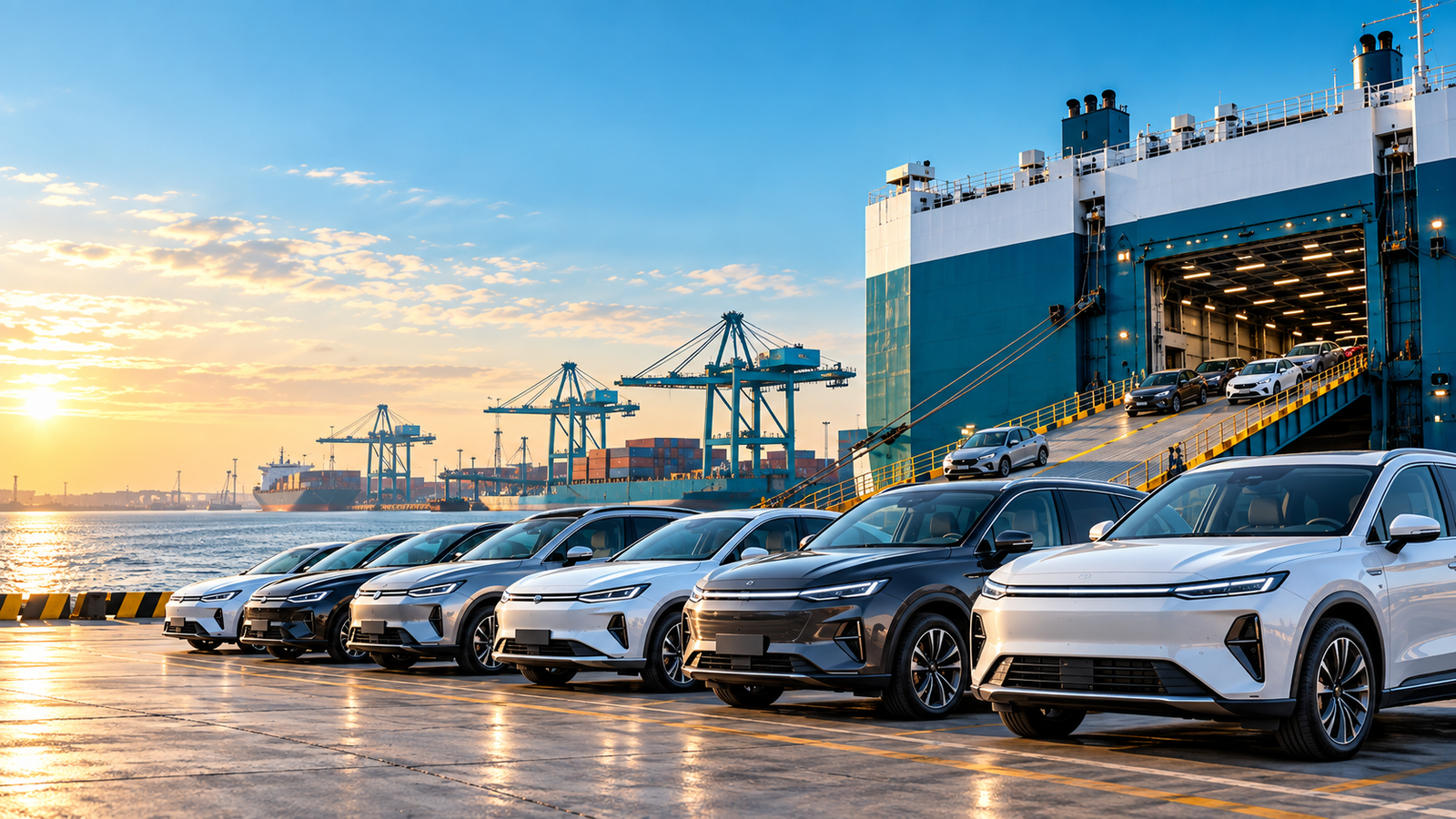
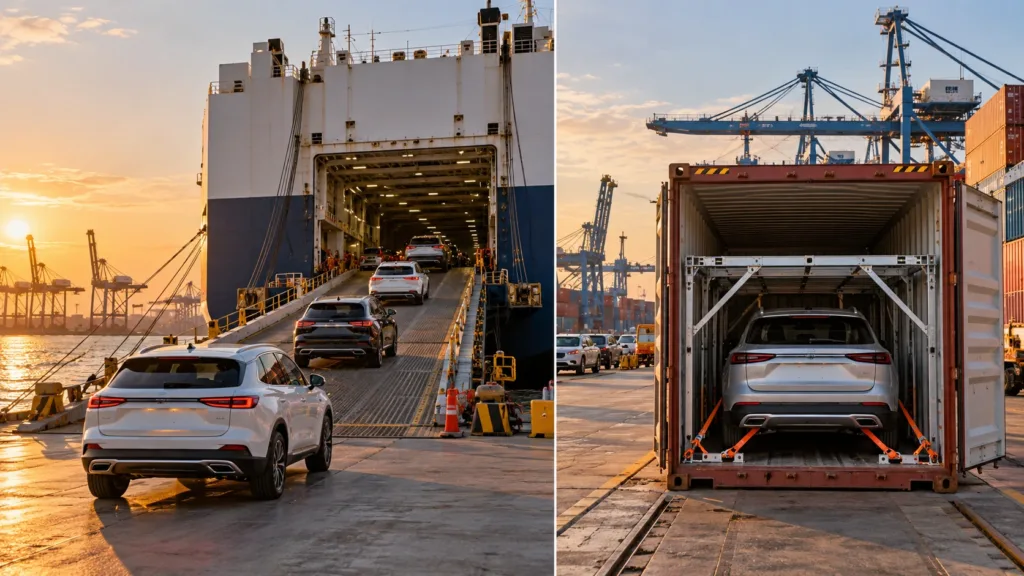
Ro-Ro stands for roll-on/roll-off. The vessel works like a floating car park. Vehicles are driven onto the ship at the loading port and driven off at the destination. Because there is no packing step, loading is quick and the cost per vehicle is often lower for standard cars and SUVs.
The drawback is exposure. Cars travel on open decks or lower decks without individual enclosures, so they face more contact with sea air and port handling. Personal items cannot be left inside the vehicle.
What Is Container Shipping?
With container shipping, each car is secured inside a 20ft or 40ft container. A 40ft container can usually hold three to four standard cars, depending on their size. The vehicles are braced with steel frames or straps so they cannot move during the voyage.
This method offers stronger protection from weather and theft. It also works on many more routes, including smaller ports that do not receive Ro-Ro vessels. The trade-off is extra cost for loading, bracing and container fees at the destination port.
5 Key Differences in Ro-Ro vs Container Car Shipping
1. Cost. Ro-Ro is often cheaper for full-size vehicles. Container shipping can become competitive when you fill the box efficiently.
2. Protection. Containers give better shelter from weather and handling risks.
3. Port availability. Container services reach far more destinations than Ro-Ro lines.
4. Capacity and size limits. Very large vehicles may not fit in a standard container, while Ro-Ro can carry taller and longer models.
5. Extra cargo. Containers can carry spare parts alongside vehicles, which is useful for dealers who want to ship both in one order.
How to Choose the Right Method
Start with your destination port. If it does not accept Ro-Ro vessels, the choice is already made. Next, consider the value of the vehicles. For premium or new energy models, many importers prefer the extra protection of a container. For large volume orders of standard cars, Ro-Ro usually gives a lower cost per unit.
Also think about your customers’ expectations. If buyers expect cars in showroom condition, the added protection may be worth the price.
Cost Factors in Ro-Ro vs Container Car Shipping
Cost is the first thing most buyers compare in ro-ro vs container car shipping. Ro-Ro freight is usually charged per vehicle based on its size, so a compact car costs less to ship than a large SUV. Container shipping is charged per box, so the price per car depends on how many vehicles fit inside.
Add port fees, inland transport, bracing and insurance to both quotes. A low freight price can become expensive once these extras appear. Compare both quotes side by side so that ro-ro vs container car shipping is judged on total landed cost, not only the ocean freight.
Transit Time and Insurance
Sailing time is similar for both methods on the same route, but schedules differ. Ro-Ro vessels sail on fixed lines, so you may need to wait for the next departure. Containers usually have more frequent sailings.
Whichever option you choose in ro-ro vs container car shipping, ask for marine insurance that covers the full vehicle value and confirm exactly which types of damage are included.
Common Mistakes to Avoid
- Comparing only the freight price and ignoring port charges.
- Forgetting to check whether the destination port accepts Ro-Ro vessels.
- Skipping loading photos and inspection records before the cars leave the port.
- Assuming the winner in ro-ro vs container car shipping stays the same for every order.
Questions to Ask Your Exporter
- Does my destination port accept Ro-Ro vessels?
- What are the local port and unloading charges?
- Is transit insurance included in the quote?
- What is the sailing schedule and free storage time at the port?
- How are the cars secured inside the container?
Conclusion
There is no single winner in ro-ro vs container car shipping. Ro-Ro is efficient and economical for large orders, while containers are safer and more flexible for small or high-value shipments. Ask for quotes for both methods and compare the total landed cost, not only the freight price.


 17Nov
 17Nov
 17Nov